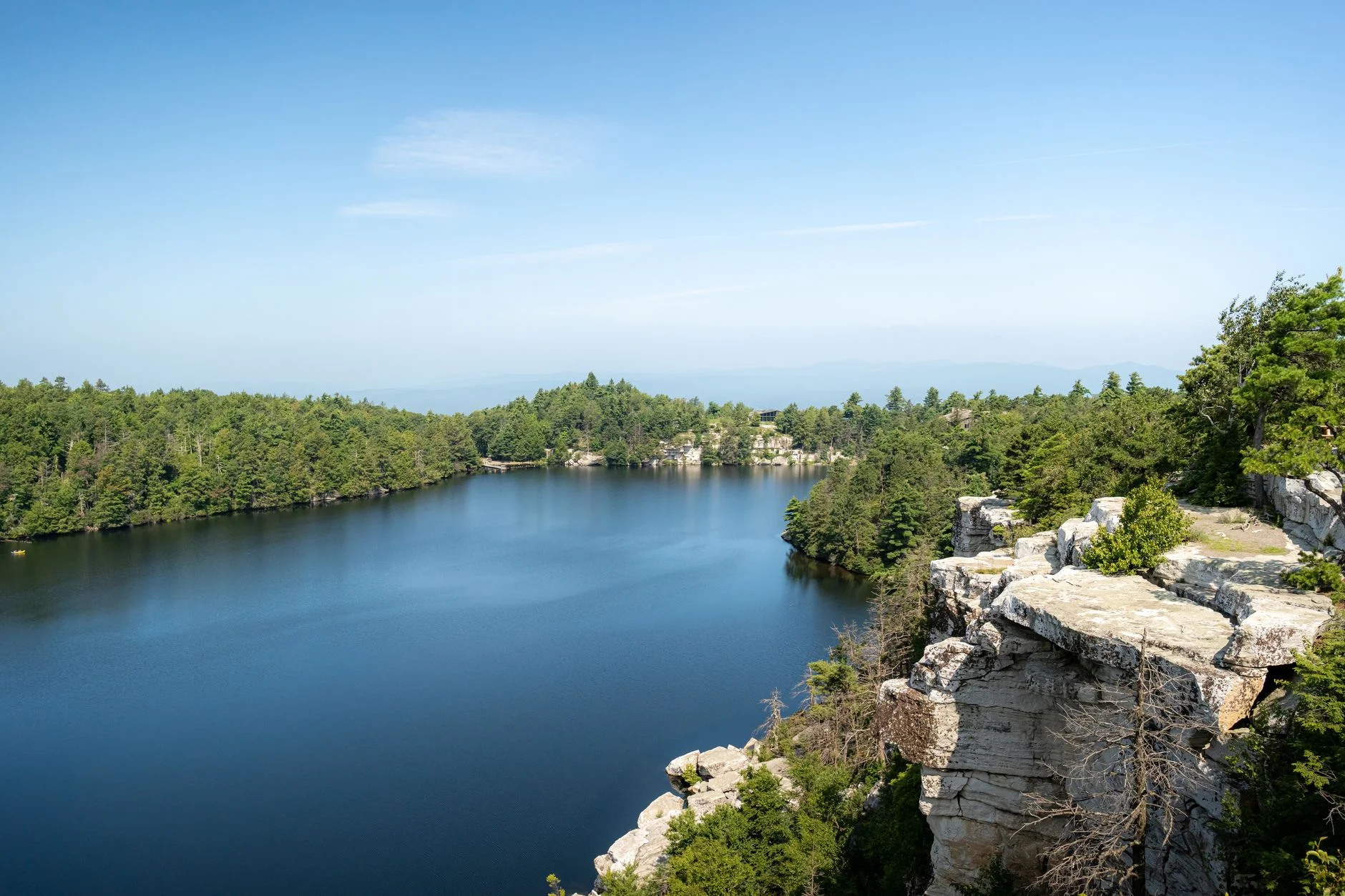
Gertrude’s Nose
Photo: Connor Scott McManus
(CC via Wikimedia)
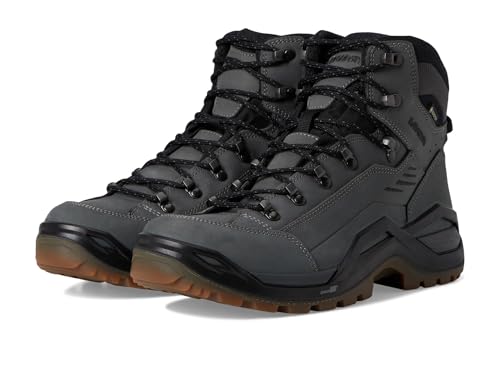 LOWA Renegade EVO GTX MidGORE-TEX, 3 widths, resolableCheck price on Amazon →
 Hydro Flask Wide Mouth 32ozinsulated, durableCheck price on Amazon →
 Osprey Talon 22ventilated back, pole carryCheck price on Amazon →
 Adventure Medical Kits Ultralight Watertight .7day-hike specific, waterproofCheck price on Amazon →
 Black Diamond Spot 400-Rrechargeable, comfortableCheck price on Amazon →
Gertrude’s Nose starts from the Lake Minnewaska parking area and follows carriage roads before dropping onto the cliff-edge footpath that gives the trail its name. The “nose” is a dramatic rock promontory jutting out over the Palmaghatt Ravine with views stretching across the Wallkill Valley to the Catskill Mountains. On clear days you can see the outline of the Catskill escarpment from Devil’s Path country all the way south.
The first mile and a half follows a wide, maintained carriage road. Enjoy it. Once you leave the carriage road for the cliff-edge trail, the character changes completely. The footing becomes white Shawangunk conglomerate — a quartz pebble rock that’s surprisingly grippy in dry conditions but slick when wet. The trail hugs the cliff edge for roughly two miles with views that don’t stop. Pitch pine and blueberry bushes line the rock ledges. In fall the blueberry foliage turns crimson and the views get a foreground that photographs can’t quite capture.
The return follows the Millbrook Mountain carriage road back, which is wider and easier underfoot. The full loop is about 7.5 miles with roughly 1,050 feet of total elevation change. Most of the climbing is gradual, but the rocky sections along the cliff edge require consistent attention to footing.
Gertrude’s Nose sits in the honest middle of moderate. The distance is real — 7.5 miles is a full morning — and the rocky cliff-edge sections demand attention. But there are no scrambles, no hands-on-rock climbing, and no sustained steep grades that stop you in your tracks.
What makes it harder than expected is the footing. The Shawangunk rock along the cliff edge is uneven and requires you to watch your step constantly. Hikers who are used to smooth dirt trails find this tiring in a different way — your ankles work the entire time. In wet conditions the conglomerate gets genuinely slippery and the cliff exposure makes that a real concern, not just an annoyance.
The return via the carriage road is flat and easy, which means you can relax and let your legs recover for the last couple miles. If 7.5 miles feels like too much, an out-and-back to Gertrude’s Nose and back (about 5 miles) gives you the best views without the full loop commitment.
Compare to nearby options: this is easier than Breakneck Ridge (less technical, less steep) but harder than Overlook Mountain (more distance, more rocky footing). If you can handle 7 miles of rocky terrain without your ankles complaining, you’re ready for Gertrude’s Nose.
Fall is the clear winner. Mid-to-late October puts the Catskill views behind peak foliage, the cliff-edge blueberry bushes turn deep red, and the temperatures are perfect for a 3-4 hour hike. October weekends at Minnewaska are busy — the park often closes the gate when the lot fills, which can happen by 10 AM on a sunny Saturday in leaf season.
Spring (late April through May) is excellent once the snow melts off the cliff sections. The park gets less crowded than fall and wildflowers line the carriage road sections. The rock can stay wet longer in spring from snowmelt, so watch your footing on the exposed ledges.
Summer works but gets hot on the exposed rock. The cliff-edge sections have no shade and the white conglomerate reflects heat. Start early and carry more water than you think you need. Late afternoon thunderstorms are a real hazard on the exposed nose — lightning on a cliff promontory is not where you want to be.
Winter is possible with microspikes but the cliff-edge exposure makes ice genuinely dangerous. The carriage road sections are fine for winter walking. Save the cliff trail for dry conditions.
Minnewaska State Park charges a $10 vehicle entrance fee. The main lot fills early on weekends from May through October — arrive before 9 AM or risk being turned away at the gate. The park closes the entrance when the lot is full and does not allow roadside parking. There is no overflow lot. If the gate is closed, your only option is to come back another day or go early enough to beat the crowd.
The trailhead is well-marked from the parking area. Follow signs for the carriage road toward Gertrude’s Nose. Restrooms are available at the parking area. No facilities on the trail itself.
Cell service is inconsistent along the cliff sections. Download a trail map before you go. The trail is well-blazed and the carriage road intersections are signed, but a map helps at the junction where you leave the carriage road for the cliff-edge footpath — the turn is easy to miss if you’re not paying attention.
Dogs are not permitted on any trail in Minnewaska State Park. Leave them home.
The drive from NYC is about 90 minutes via the New York Thruway to New Paltz, then 15 minutes up Route 44/55. From the Catskills or Hudson Valley, the park is accessible from multiple directions. New Paltz itself has restaurants and shops worth a stop after the hike.
The first time you step onto the cliff edge and the Wallkill Valley opens up below you, the scale of the view catches you off guard. The Shawangunk Ridge drops away hundreds of feet and the Catskills fill the western horizon. Most hikers stop and stare for a minute before remembering they have miles left to go.
The cliff-edge section is the kind of trail that makes you walk slowly — not because it’s hard, but because there’s something to look at every fifty feet. The pitch pines grow directly out of cracks in the rock, bent sideways by decades of wind. In fall the entire ledge system turns colors. In summer the rock radiates heat and the blueberry bushes are heavy enough to pick from.
Hikers who know both the Catskills and the Gunks consistently put Gertrude’s Nose in their top five for the region. It’s not the hardest trail or the most famous, but the cliff-edge walk is unlike anything else within two hours of New York City.
LOWA Renegade EVO GTX MidGORE-TEX, 3 widths, resolableCheck price on Amazon →Hydro Flask Wide Mouth 32ozinsulated, durableCheck price on Amazon →Osprey Talon 22ventilated back, pole carryCheck price on Amazon →Adventure Medical Kits Ultralight Watertight .7day-hike specific, waterproofCheck price on Amazon →Black Diamond Spot 400-Rrechargeable, comfortableCheck price on Amazon → Patagonia Torrentshell 3L Jacketdurable, trail + everydayCheck price on Amazon →
 Darn Tough Hiker Micro Crew Midweightlifetime warrantyCheck price on Amazon →
 Black Diamond Pursuit Trekking Polescork grip, lightweightCheck price on Amazon →
 Sawyer Squeeze Water Filterultralight, standard threadsCheck price on Amazon →


