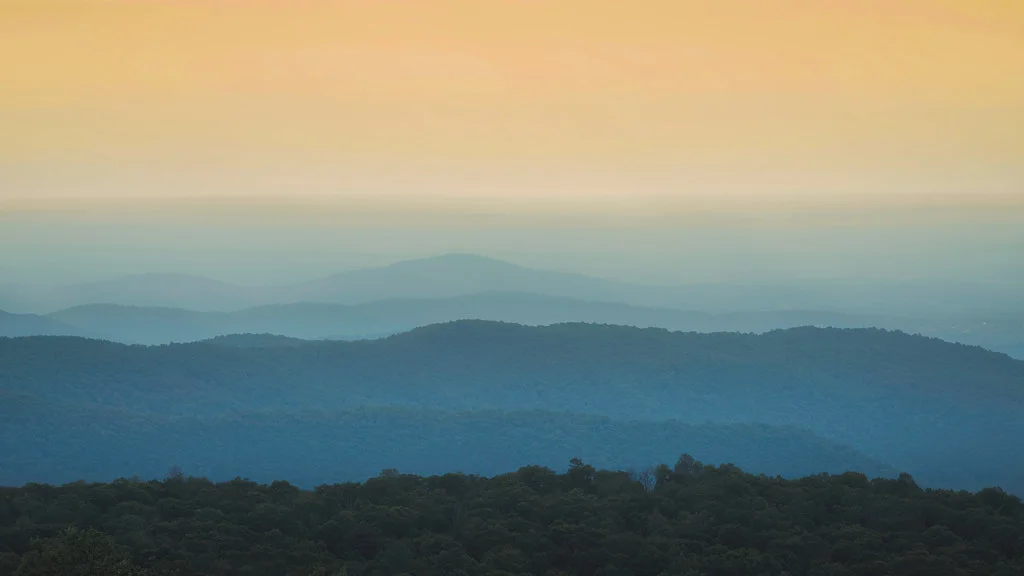
Virginia hikers learn early that elevation numbers lie. The state’s highest point is barely 5,700 feet. The trails don’t care. Old Rag’s boulder scramble sends people to the hospital. Dragon’s Tooth has a knife-edge rock spine where a wrong step carries real consequences. And the Blue Ridge Parkway trails pack enough vertical into short distances to humble anyone who thought Virginia hiking was gentle.
These are the trails that separate the Shenandoah drive-by tourists from the people who actually came to hike.
Is Old Rag Mountain Really That Hard?

Old Rag Mountain is universally described as genuinely challenging. Not “hard for beginners.” Legitimately demanding for anyone. The 9.8-mile circuit includes a mile-long granite boulder scramble that requires upper body strength, route-finding through crevices, and comfort with exposure. Hikers with large packs or limited upper body mobility struggle significantly.
The rock scramble section surprises hikers with its intensity. Ice in winter makes it a different sport entirely — one hiker found crampons “immediately obvious” as necessary. Then comes the descent: 4+ miles of monotonous loose gravel on the fire road that hikers unanimously describe as “brutally tedious.” The excitement is over, but the physical toll is just beginning.
The parking lots fill by mid-morning on weekends. Day-use tickets are required March through November — purchase in advance from recreation.gov or you will be turned away at the trailhead.
Stats: 9.8 miles | 2,800 ft gain | Timed entry permit required (Mar-Nov)
How Dangerous Is Dragon’s Tooth?
Dragon’s Tooth in the Catawba Valley is the hike where Virginia stops being polite. The trail climbs steeply through forest before reaching exposed rock scrambles that lead to the tooth itself — a jagged rock spine with drop-offs on both sides. The scramble to reach the actual tooth formation requires handholds and comfort with heights.
The difficulty here is concentrated. The total distance is modest, but the final approach packs genuine exposure into a short stretch. Wet conditions make the rock genuinely slippery, and hikers report the descent is harder than the climb because downhill scrambling on loose rock demands more control than going up.
Stats: 4.6 miles | 1,700 ft gain | Exposed rock scramble at the summit
Which Shenandoah Trails Are Harder Than They Look?
Bearfence Mountain is only 1.2 miles, but it packs a legitimate rock scramble into that distance. The circuit involves hand-over-foot climbing up exposed boulders with 360-degree summit views as the reward. It’s short enough that people bring kids, and hard enough that some of those kids turn around. The scramble sections are the real thing — not a “scramble” in name only.
Whiteoak Canyon is rated moderate, but the 7.3-mile loop with six waterfalls has enough rocky terrain and elevation change to leave most hikers more tired than expected. The return climb out of the canyon after a full day of waterfall hopping catches people off guard. It’s not technically hard, it’s cumulatively hard.
Cedar Run Trail pairs with Whiteoak for a loop that’s among the hardest day hikes in Shenandoah. The Cedar Run side is steep, rocky, and involves stream crossings that range from annoying to impassable depending on recent rain. Hikers who expected a waterfall stroll find themselves on a serious trail.
What About the Blue Ridge Parkway Trails?
Humpback Rocks is the classic “harder than it looks” Virginia hike. The trail is only 2 miles round trip, but it climbs 800 feet in that distance on steep, rocky terrain. Weekend crowds are heavy. The reward — a 360-degree panoramic overlook — makes the steepness worthwhile, but don’t mistake short for easy.
Sharp Top at Peaks of Otter is another short-but-steep Parkway hike. The 3.3-mile round trip climbs 1,340 feet, which works out to a grade that your calves will remember. The summit has one of the best views on the entire Blue Ridge Parkway.
Crabtree Falls is the tallest cascading waterfall east of the Mississippi at over 1,200 feet of total drop. The trail follows the cascade with multiple overlook platforms. It’s rated moderate, but the continuous stairway climbing adds up, and the exposure near the upper falls is real. Falls here have been fatal — stay behind the railings.
Which Virginia Trail Is the Hardest Overall?
Three Ridges via the Mau-Har Trail is the longest and most demanding trail in this article. The 13.5-mile loop combines the AT over Three Ridges summit with creek crossings that can be knee-deep after rain. This is a full-day commitment for strong hikers and an overnight for most. The elevation profile is relentless — you climb Three Ridges, descend completely, and then have to climb back out.
McAfee Knob is Virginia’s most photographed summit and the iconic Appalachian Trail overlook. The 8.8-mile round trip climbs 1,700 feet on a well-maintained trail. It’s not the hardest hike in the state, but the distance and elevation gain earn it a spot on this list. The parking lot fills by 7:30 AM on weekends.
How Do the Hardest Virginia Hikes Compare?
| Trail | Miles | Elev. Gain | What Makes It Hard |
|---|---|---|---|
| Three Ridges Loop | 13.5 | 3,300 ft | Length, creek crossings, relentless profile |
| Old Rag Mountain | 9.8 | 2,800 ft | Boulder scramble + brutal fire road descent |
| McAfee Knob | 8.8 | 1,700 ft | Distance, steady climb, crowded |
| Whiteoak Canyon | 7.3 | 1,600 ft | Six waterfalls, cumulative terrain |
| Dragon’s Tooth | 4.6 | 1,700 ft | Knife-edge rock, exposed scramble |
| Sharp Top | 3.3 | 1,340 ft | Steep grade, calves-on-fire climb |
| Humpback Rocks | 2.0 | 800 ft | Short but steep, deceptive difficulty |
| Crabtree Falls | 3.0 | 1,000 ft | Continuous stairs, fatal exposure near top |
| Bearfence Mountain | 1.2 | 300 ft | Real rock scramble in short distance |
What Should I Know Before Hiking Hard Trails in Virginia?
Old Rag requires advance tickets. March through November, you need a timed day-use ticket from recreation.gov. No ticket, no hike. This isn’t optional and they enforce it at the trailhead. Plan ahead.
Shenandoah trails are consistently harder than rated. Park service “moderate” often means “legitimately challenging” by most hikers’ standards. If a Shenandoah trail says moderate and involves waterfalls or rock scrambles, add a difficulty level mentally.
Wet rock is the primary hazard. Virginia’s granite gets slippery fast. Old Rag, Dragon’s Tooth, and Crabtree Falls all become significantly more dangerous after rain. If the rock is wet, reassess your plans — especially on trails with exposure.
Parking fills early, especially near Charlottesville. Old Rag, Humpback Rocks, and Charlottesville-area trails have limited parking that fills by mid-morning on weekends. Weekday mornings are dramatically better.
For more hard trails beyond Virginia, including routes in the Catskills, Adirondacks, and New Hampshire, see our hardest hikes on the East Coast roundup.