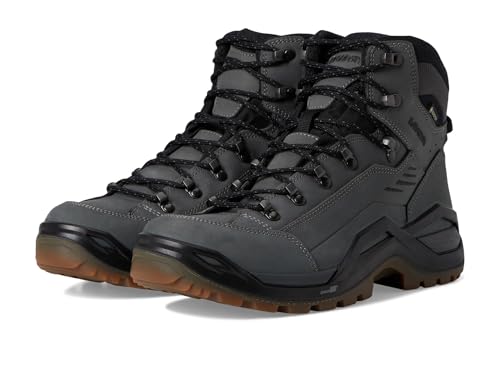
 LOWA Renegade EVO GTX MidGORE-TEX, 3 widths, resolableCheck price on Amazon →
 Hydro Flask Wide Mouth 32ozinsulated, durableCheck price on Amazon →
 Osprey Talon 22ventilated back, pole carryCheck price on Amazon →
 Adventure Medical Kits Ultralight Watertight .7day-hike specific, waterproofCheck price on Amazon →
 Black Diamond Spot 400-Rrechargeable, comfortableCheck price on Amazon →
What to Expect on the Trail
Myakka River State Park is one of the oldest and largest state parks in Florida, covering over 37,000 acres (58 square miles) of prairie, wetland, and forest along the Myakka River in Sarasota County. The scale is what hits you first. The prairie sections stretch to the horizon with no development visible in any direction — a landscape that looks like what Florida was before the golf courses and gated communities arrived.
The Prairie Trail is a 7-mile loop through open grassland and scattered live oak hammocks. The trail follows mowed paths through knee-high wiregrass with clumps of saw palmetto and scattered cabbage palms. In winter, sandhill cranes gather on the prairie in flocks that can number in the hundreds. Hawks — red-shouldered, red-tailed, and the occasional short-tailed hawk — circle overhead year-round. The open landscape makes the birding easy. You can see for a mile in every direction, and the birds are visible at distances that would be impossible in forested settings.
The live oak hammocks scattered across the prairie provide shade, wildlife cover, and a dramatic change in atmosphere. Walking from the exposed prairie into a hammock of live oaks draped in resurrection fern and Spanish moss is like stepping into a different climate zone. The hammocks are cooler, darker, and quieter. Many hikers use them as rest stops to escape the sun before continuing across the open grassland.
Alligators are a constant presence throughout the park. Rangers warn visitors not to swim anywhere in the park — the alligator population is dense enough that any body of water should be assumed to have alligators in it. On the Prairie Trail, alligators occasionally bask on or beside the trail itself, especially near drainage ditches and low-lying wet areas. Keep 15 feet of distance. Do not approach, feed, or provoke them. The alligators are generally indifferent to hikers who maintain distance, but they are wild predators and should be treated with corresponding respect.
How Hard Is This Trail, Really?
Easy in terms of terrain. The Prairie Trail is completely flat — this is a Florida prairie with zero elevation change. The trail surface is mowed grass and packed dirt. No rocks, no roots, no technical difficulty. The 7-mile loop is the longest easy trail in the park, and the distance is the only physical demand.
The difficulty is environmental. The prairie sections have no shade for miles. In summer the heat is oppressive and the sun exposure is dangerous. Carry at least 2 liters of water per person. Wear a hat and sunscreen. The trail can feel endless in the midday sun because there are no landmarks — just grassland in every direction. In winter, the conditions are ideal: cool, dry, and comfortable.
Budget 2.5 to 3.5 hours for the full 7-mile loop, longer if you stop for wildlife viewing. Most visitors combine shorter sections of the Prairie Trail with other park trails rather than completing the full loop. The park’s trail network exceeds 39 miles, including the Florida Trail, which provides options for every distance and time commitment.
Best Time to Go
October through April is the clear best season. The sandhill cranes are present from November through February. The weather is cool enough for exposed prairie walking. The alligators are active but less aggressive than during mating season (April through June). Migratory birds supplement the resident species, pushing the birding quality to its annual peak.
Winter mornings are the optimal time of day. The golden hour light on the prairie creates photography conditions that draw serious wildlife photographers. The cranes and wading birds are most active in early morning. The alligators bask in the warming sun. By midday, the activity drops and the heat builds even in winter.
Summer is for dedicated naturalists. The heat, humidity, and mosquitoes are all at their worst. The alligator mating season (April through June) makes the animals more active and less predictable. Start before dawn in summer and plan to be done by 10 AM.
Before You Go
Myakka River State Park is on State Road 72, about 9 miles east of downtown Sarasota. The main entrance is well-signed. Entrance fee: $6 per vehicle (up to 8 passengers). The park is open 8 AM to sunset year-round.
The park has a visitor center, two campgrounds with electric and water hookups, primitive campsites, and CCC-built picnic pavilions from the 1930s that are still in use. The Civilian Conservation Corps built much of the park’s original infrastructure during the Great Depression, and the stone-and-timber pavilions are beautiful examples of CCC craftsmanship.
The canopy walkway is a suspended bridge through the live oak canopy — Florida’s first — that provides a different perspective on the forest ecosystem. It is a short walk from the main road and worth the 15-minute detour. The walkway is about 25 feet above the forest floor and extends to an observation tower with views over the treetops.
Airboat tours are available on the Myakka River and Upper Myakka Lake. They are fun but loud — if you are visiting for the wildlife viewing and solitude, do the airboat tour after the hiking, not before. The noise carries across the prairie and temporarily disturbs the wildlife in the area.
No dogs allowed on the Prairie Trail or most park trails. This is enforced for wildlife protection — the alligators, ground-nesting birds, and other wildlife cannot coexist safely with dogs. Binoculars are essential. The open prairie makes distant wildlife visible, but identification at distance requires optics. A spotting scope is useful for the crane flocks.
Word from the Trail
Myakka feels like a different Florida. Not the Florida of beaches and theme parks, but the Florida that existed before any of that — a vast, flat, open landscape where the horizon is unbroken and the wildlife is the main attraction. The prairie stretches out under a sky so big it makes you recalibrate your sense of scale. The sandhill cranes move across the grassland in family groups, calling in that ancient, rattling voice that carries for a mile. The alligators lie motionless at the edge of the trail, indifferent to your presence and your camera. Everything here operates on a timescale that makes human urgency feel small.
Frequently Asked Questions
LOWA Renegade EVO GTX MidGORE-TEX, 3 widths, resolableCheck price on Amazon →Hydro Flask Wide Mouth 32ozinsulated, durableCheck price on Amazon →Osprey Talon 22ventilated back, pole carryCheck price on Amazon →Adventure Medical Kits Ultralight Watertight .7day-hike specific, waterproofCheck price on Amazon →Black Diamond Spot 400-Rrechargeable, comfortableCheck price on Amazon → Patagonia Torrentshell 3L Jacketdurable, trail + everydayCheck price on Amazon →
 Darn Tough Hiker Micro Crew Midweightlifetime warrantyCheck price on Amazon →
 Black Diamond Pursuit Trekking Polescork grip, lightweightCheck price on Amazon →
 Sawyer Squeeze Water Filterultralight, standard threadsCheck price on Amazon →