The East Coast tops out at 6,684 feet, and people who hike out West like to bring that up. What the numbers hide is how these mountains make you earn every foot. Trails here were cut in the 1800s by people who considered switchbacks a moral failing, so you climb straight up the fall line, over roots and wet granite, and the summit views arrive all at once instead of an hour in advance.
These twelve earn their spots for different reasons. Some are the obvious icons. A few are quieter peaks that deliver more than their elevation suggests. All of them have a real summit payoff, and all of them link to a full trail guide with directions, parking, and current conditions.
What Is the Best Mountain Hike on the East Coast?
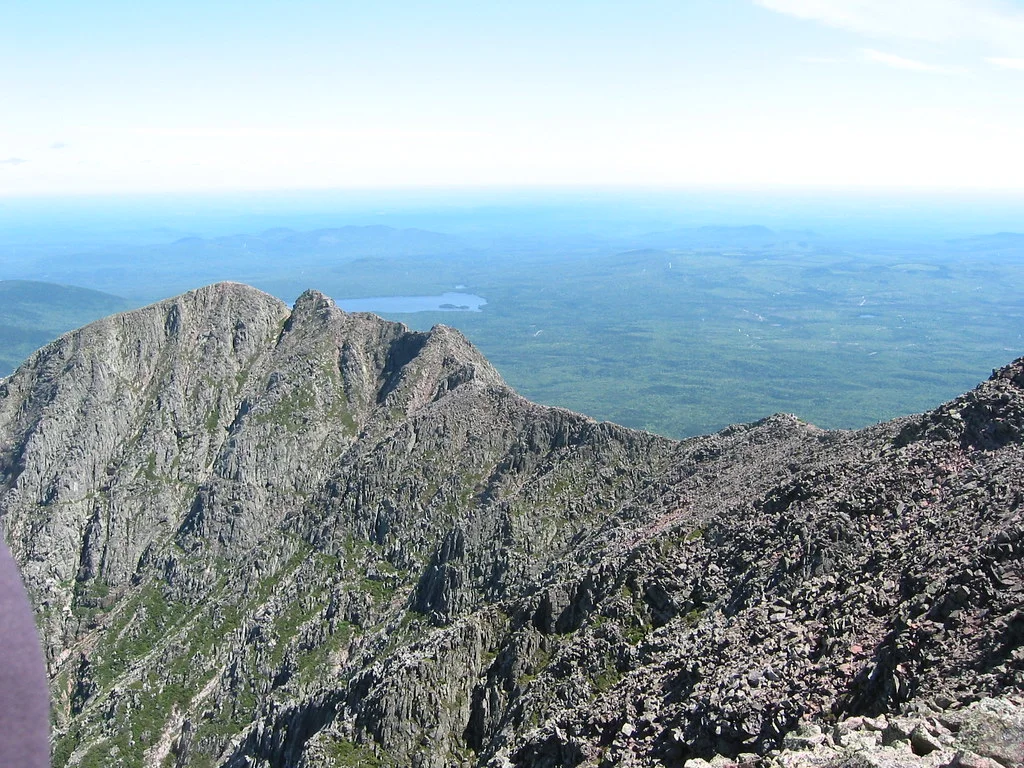
If one hike has to carry the title, it’s Mount Katahdin in Maine’s Baxter State Park. The 10.4-mile round trip to Baxter Peak (5,269 ft) gains 4,188 feet, takes 8 to 12 hours, and finishes at the sign where the Appalachian Trail ends. Thru-hikers cry when they touch it. Day hikers mostly just try not to cry on the boulder problems of the Hunt Trail, where white blazes are painted on rocks the size of refrigerators.
The Knife Edge is the reason Katahdin sits at the top of this list. It’s a 1.1-mile ridge connecting Pamola Peak to Baxter Peak, in places about three feet wide, with long drops on both sides. In good weather it’s the most exhilarating stretch of trail east of the Rockies. In bad weather it’s closed, and you should believe the rangers when they close it.
Plan ahead: Baxter State Park caps daily parking and reservations open months out. This is not a mountain you hike on a whim.
Which White Mountains Hike Should You Do First?
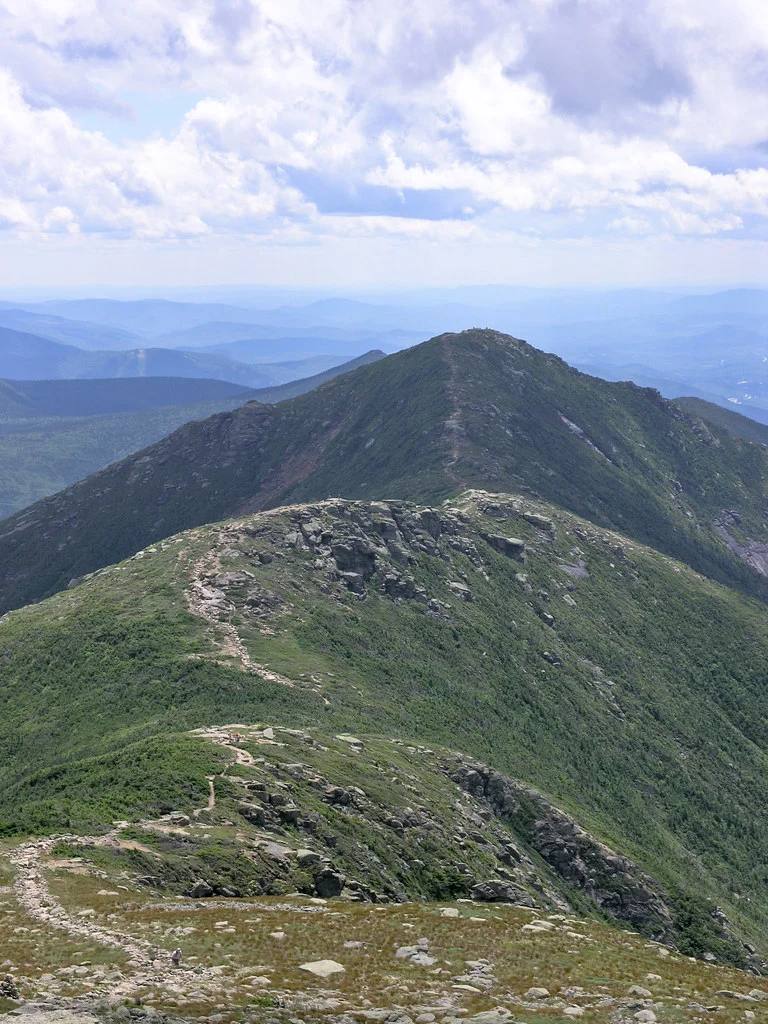
Franconia Ridge Loop is the answer, and it isn’t close. The 8.8-mile loop climbs past three waterfalls on the Falling Waters Trail, breaks out of the trees at Little Haystack, then runs 1.7 miles along an open alpine ridge over Mount Lincoln to Mount Lafayette (5,260 ft) before descending past Greenleaf Hut. You spend the best part of the day walking a catwalk in the sky.
The exposure that makes it spectacular also makes it serious. The ridge takes the full force of whatever weather is moving through New Hampshire, and wind that was a breeze in the parking lot can knock you sideways up top. It also appears on our hardest hikes on the East Coast list, which tells you something about doing both lists with one trail.
Do the loop counterclockwise: up Falling Waters, across the ridge, down the Old Bridle Path. You get the waterfalls while your legs are fresh, the ridge at midday when thermals are most predictable, and Greenleaf Hut as a snack stop with Lafayette framed in the window behind the lemonade.
What Are the Best Mountain Hikes in the Mid-Atlantic?
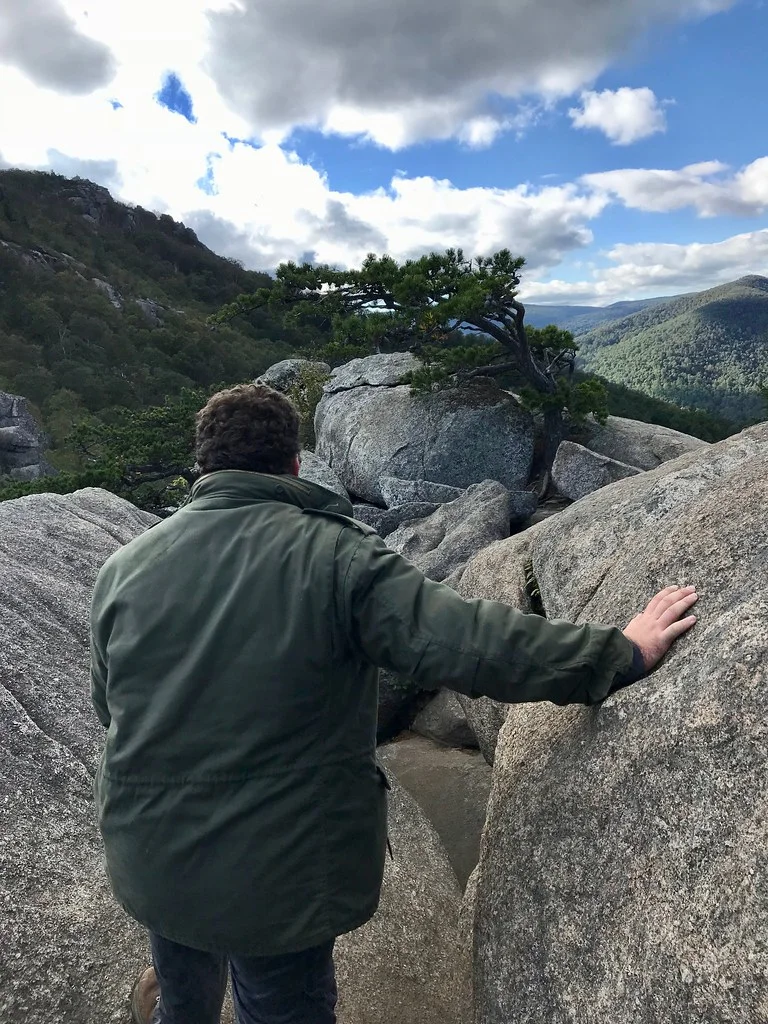
Old Rag Mountain in Shenandoah National Park is the South’s most famous day hike, and the mile-long rock scramble along the summit ridge is why. The 9.8-mile circuit gains 2,800 feet and forces you through granite squeezes, up natural staircases, and across a boulder field where using your hands is not optional. Kids on their first scramble and grizzled AT section hikers grin the same way at the top. You need a day-use ticket from March through November, bought in advance, and weekends sell out.
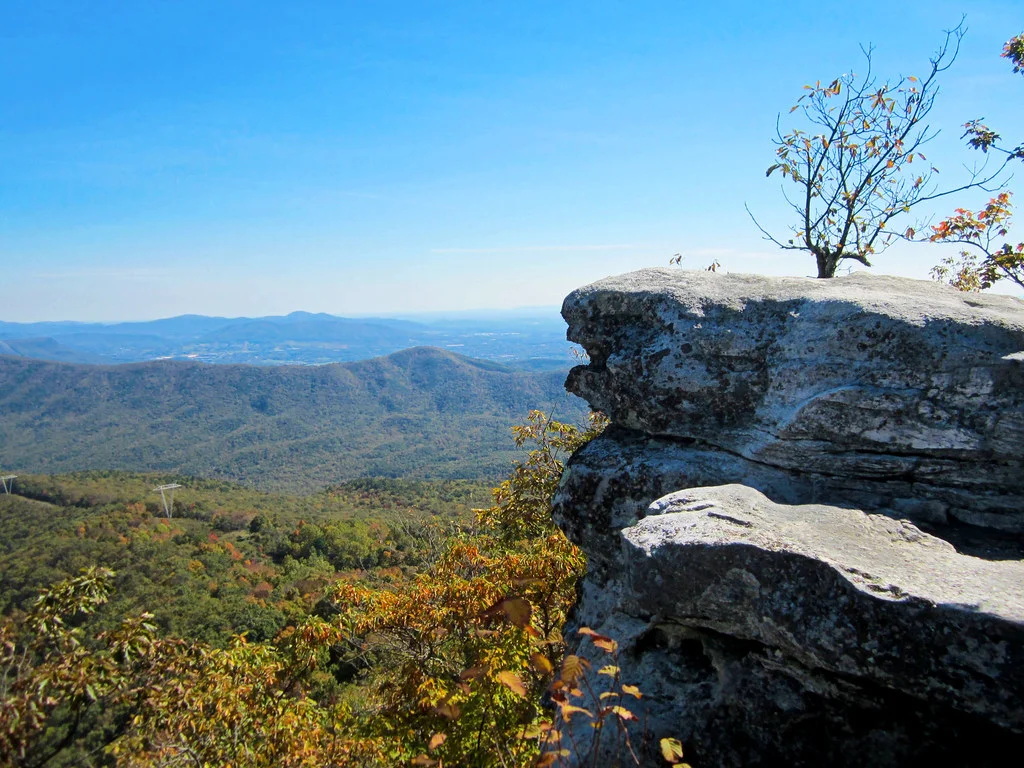
McAfee Knob near Roanoke is the most photographed spot on the entire Appalachian Trail: a rock ledge hanging over the Catawba Valley with a 270-degree view. The 8.8-mile round trip is honest, steady work rather than a scramble, gaining 1,740 feet on well-graded trail. Go at sunrise on a weekday. The ledge photo with your boots over the void is mandatory; the line for it on a Saturday afternoon is not.
Where Should You Hike in New England Beyond the Whites?
Tumbledown Mountain in western Maine hides an alpine pond at 2,600 feet, tucked just below the summit ridge. The Brook Trail gets you there in a steep 1.5 miles, and swimming in Tumbledown Pond after tagging the peak is a Maine rite of passage. Hikers who want their hands on rock take the Loop Trail instead, which threads a boulder chimney near the top.
Equinox Mountain rises 2,850 feet in 3.5 miles straight out of Manchester, Vermont. It’s the highest peak in the Taconic Range (3,848 ft), and the Blue Summit Trail is a leg-burner with a lookout over the Battenkill Valley as the reward.
Mount Greylock (3,491 ft) is the roof of Massachusetts, topped by a 93-foot granite war memorial tower and a summit lodge that serves chowder. The 6.8-mile route earns it properly. Herman Melville stared at this mountain while writing Moby-Dick; the profile reminded him of a whale.
Bear Mountain in Salisbury, Connecticut (2,316 ft) is the state’s highest summit, reached by a 6.4-mile loop on the Undermountain Trail and the AT. The last pitch climbs a steep rock staircase to a stone monument pile, with views across three states.
What Are the Best Mountain Hikes in New York?
Cascade Mountain (4,098 ft) is where Adirondack High Peaks careers begin. At 4.8 miles round trip with 1,940 feet of gain, it’s the most accessible of the 46 High Peaks, and the bare rock summit hands you a full panorama of the range you’ll spend the next decade climbing. Start early; everyone knows this is the starter 46er.
Slide Mountain (4,180 ft) is the top of the Catskills, and it feels wilder than its 6-mile round trip suggests. The summit clearing holds a plaque honoring naturalist John Burroughs, who slept beneath the ledge below it. Pair it with our Devil’s Path guide if you want to see what the Catskills look like when they stop being polite.
Are There Real Mountain Hikes in the South?
The Smokies answer that question emphatically. The Alum Cave Trail to Mount LeConte climbs 2,800 feet over 5.5 miles (11 miles round trip), passing through Arch Rock, along the exposed ledges at Alum Cave Bluffs, and up cable-assisted rock faces to a 6,593-foot summit with a llama-supplied lodge on top. It’s the best single day in Great Smoky Mountains National Park.
Grandfather Mountain’s Profile Trail in North Carolina climbs 2,000 feet to Calloway Peak (5,946 ft), the highest point in the Blue Ridge proper. The final quarter mile involves wooden ladders bolted to rock. It’s the southern peak that feels most like New England, right down to the spruce-fir forest and the weather that changes its mind hourly.
How Do the Best Mountain Hikes Compare?
| Trail | State | Miles | Gain (ft) | Difficulty |
|---|---|---|---|---|
| Mount Katahdin | ME | 10.4 | 4,188 | Very Strenuous |
| Franconia Ridge Loop | NH | 8.8 | 3,900 | Strenuous |
| Old Rag Mountain | VA | 9.8 | 2,800 | Strenuous |
| Alum Cave to Mount LeConte | TN | 11.0 | 2,800 | Strenuous |
| Equinox Mountain | VT | 7.0 | 2,850 | Strenuous |
| Mount Greylock | MA | 6.8 | 2,200 | Strenuous |
| Grandfather Mountain (Profile) | NC | 6.0 | 2,000 | Strenuous |
| Cascade Mountain | NY | 4.8 | 1,940 | Moderate |
| McAfee Knob | VA | 8.8 | 1,740 | Moderate |
| Slide Mountain | NY | 6.0 | 1,700 | Moderate |
| Tumbledown Mountain | ME | 3.0 | 1,600 | Strenuous |
| Bear Mountain | CT | 6.4 | 1,550 | Strenuous |
When Is the Best Time to Hike These Mountains?
September and early October are the sweet spot for nearly every peak on this list. The air clears, the bugs die off, and the northern summits (Katahdin, Franconia, Tumbledown) sit above a sea of turning maples. The catch is that everyone else knows this too, so book Baxter reservations and Old Rag tickets the moment fall weekends open up.
Summer works fine at elevation. LeConte and Grandfather run 15 to 20 degrees cooler than the valleys below them, which makes them the rare southern hikes that improve in July. Winter turns most of these into mountaineering objectives; Cascade and Greylock are the two that stay reasonable with microspikes. Spring is the honest answer for when to skip: snowmelt, mud season closures in Vermont and the Adirondacks, and black flies in Maine that will make you question the entire hobby.
What Should You Know Before Hiking These Mountains?
Three of these summits require paperwork. Katahdin needs a Baxter State Park parking reservation, Old Rag needs a day-use ticket from March through November, and Grandfather’s Profile Trail requires (free) registration at the trailhead. Check each trail guide for the current rules before you drive four hours.
Above-treeline weather is the other thing that catches people. Franconia Ridge, Katahdin, and LeConte all put you in terrain where conditions run 20 to 30 degrees colder and far windier than the trailhead. Carry real layers even in July, and treat a bad forecast as a rescheduling notice rather than a challenge.
If you’re building toward the big ones, start with Cascade, Slide, or Tumbledown, then work through Greylock and McAfee Knob before you take on Franconia Ridge or Katahdin. And if summit views at dawn are the goal, several of these peaks also appear on our best sunrise hikes list, where the alarm clock does half the suffering for you.
For the full regional picture beyond summits, with scrambles, waterfalls, and coastal walking included, start with our guide to the best hikes on the East Coast.